India is rapidly emerging as one of the most trustworthy agricultural export-ready countries globally. With the presence of varied climatic conditions, improved agricultural methodologies, and growing international acceptance of Indian agricultural products, 2026 promises to be a turning point for agricultural exports from India.
From farm-fresh fruits to processed foods, agricultural products of Indian origin have been catering to global demands in terms of quality, price, and sustainable practices. Through this blog, we will examine how Indian agricultural products are leading global markets in terms of quality and price in 2026, along with practical exporting examples, while emphasising the involvement of MK Exports in the exporting process.
What’s Driving the Growth of Indian Agro Exports?
Several global trends are accelerating India’s export momentum:
- Increased demand for natural and plant-based food
- Rising preference for ethnic and authentic flavours
- Expansion of cold-chain logistics
- Strong compliance with international food safety standards
- Competitive pricing compared to other exporting nations
For example, many Middle Eastern countries now prefer Indian suppliers for fruits and vegetables due to faster transit times and consistent quality.
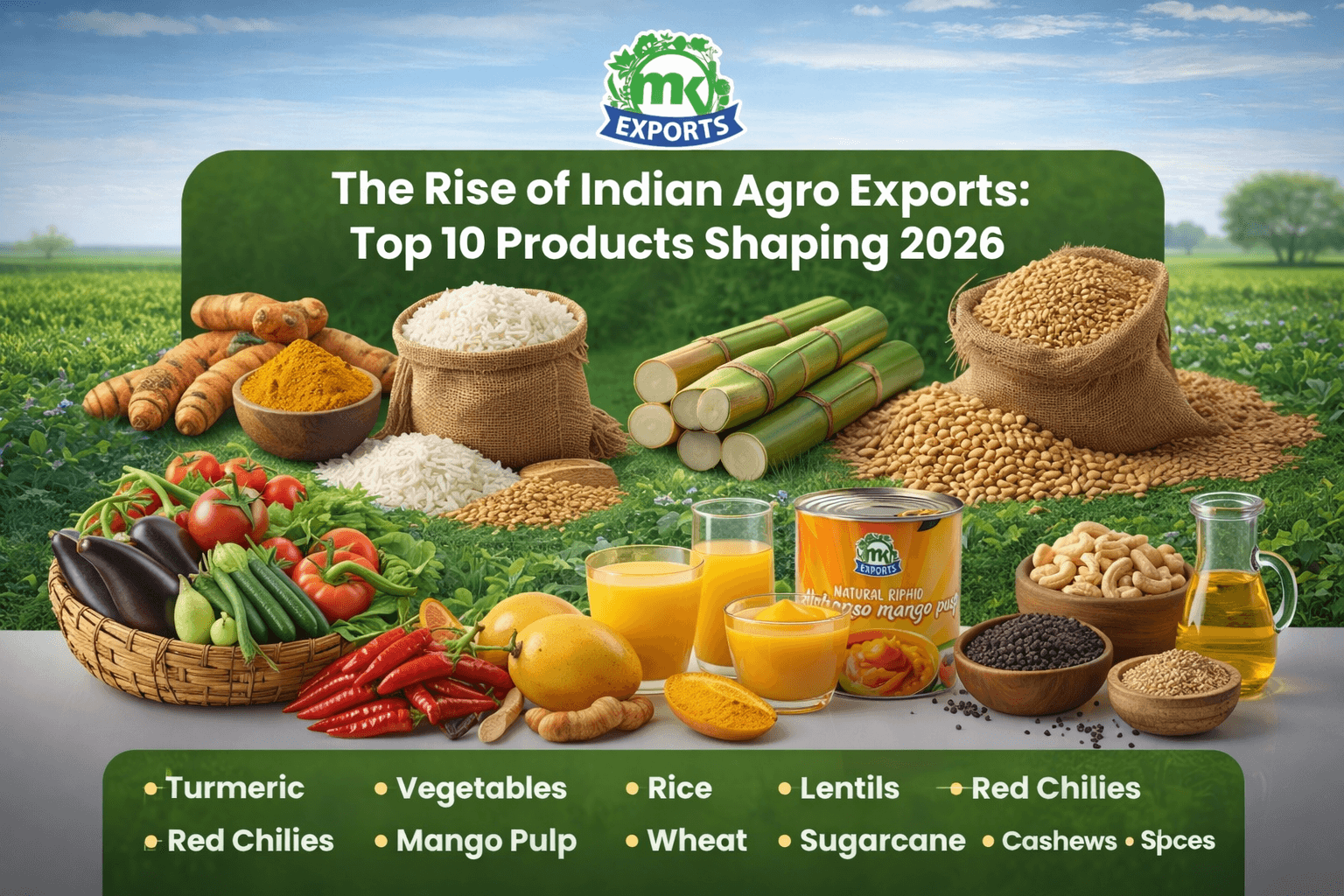
Top 10 Indian Agro Products Shaping Global Demand in 2026
1. Fresh Fruits
Indian fruits such as Alphonso mangoes, bananas, grapes, and pomegranates are in growing demand across Europe, the Middle East, and Southeast Asia.
Example:
Indian mangoes are exported to countries like the UAE and the UK during the summer season, where they are sold as premium seasonal fruits due to their aroma and natural sweetness.
Exporters like MK Exports focus on careful grading, hygienic packing, and temperature-controlled logistics to preserve freshness during transit.
2. Fresh Vegetables
Vegetables such as onions, okra, drumsticks, green chillies, and bottle gourd are becoming staples in international wholesale markets.
Example:
Indian onions are widely imported by Sri Lanka and Bangladesh, while okra and green chillies are popular in Gulf countries for daily cooking.
India’s year-round production ensures a consistent supply, a major advantage for global buyers.
3. Rice (Basmati and Non-Basmati)
India continues to dominate the global rice export market, especially in basmati rice, known for its fragrance and long grains.
Example:
Restaurants in Saudi Arabia and Iran prefer Indian basmati rice for biryani due to its cooking quality and aroma, while African countries import non-basmati rice for daily consumption.
4. Spices
Indian spices such as turmeric, chilli, cumin, coriander, and black pepper are essential ingredients in global kitchens.
Example:
Turmeric powder from India is widely used in European health-food products due to its curcumin content, while Indian chilli is preferred by food processors in Southeast Asia.
Quality testing and residue-free processing are critical for spice exports in 2026.
5. Pulses and Lentils
With the global rise of vegetarian and vegan diets, Indian pulses are seeing strong demand.
Example:
Indian chickpeas and lentils are used in hummus production in the Middle East and plant-based protein foods in Europe.
These products are valued for their high protein and long shelf life.
6. Oilseeds and Seeds
Products such as sesame seeds, groundnuts, and mustard seeds are gaining popularity due to their nutritional benefits.
Example:
Indian sesame seeds are widely used in the bakery and confectionery industries in Japan and South Korea, where quality and purity are strictly monitored.
7. Organic Agro Products
Organic farming is one of India’s fastest-growing export segments.
Example:
Organic rice and organic spices from India are sold in premium supermarkets in Germany and the USA, where consumers actively seek chemical-free food.
Exporters ensure certification and traceability to meet international organic standards.
8. Processed and Value-Added Agro Products
Processed agro products such as dehydrated onions, frozen vegetables, spice powders, and ready-to-cook foods are gaining strong traction.
Example:
Dehydrated onion flakes from India are used by fast-food chains and food manufacturers in Europe because of their long shelf life and consistent flavour.
This segment offers higher margins and export stability.
9. Tea and Coffee
Indian tea and coffee continue to enjoy global recognition.
Example:
Assam tea is popular in the UK, while Indian coffee beans are exported to Italy for espresso blends.
Demand for sustainably sourced and traceable tea and coffee is expected to grow further in 2026.
10. Sugar and Jaggery Products
Traditional Indian sweeteners are finding new global markets.
Example:
Jaggery powder is exported to health-conscious markets in the USA and Australia as a natural alternative to refined sugar.
This shift towards traditional, less-processed foods is boosting exports.
India’s Competitive Advantage in 2026
India’s agro export success is supported by:
- Government export promotion schemes
- Strong APEDA support
- Improved logistics and port infrastructure
- Professional exporters like MK Exports ensure quality control and timely delivery
How MK Exports Supports Global Agro Trade
MK Exports works closely with farmers, processors, and logistics partners to deliver export-quality Indian agro products to international markets.
By focusing on compliance, packaging standards, and supply consistency, MK Exports helps global buyers source Indian produce with confidence.
Conclusion
The advent of agro exports from India in the year 2026 has come about as a result of the increasing significance of India in the role of feeding the world. The rising demands for fresh vegetables, grains, spices, and other value-added foods have led to this new significant chapter within the agricultural sector of India.
Hence, as offshore buyers get ready to search for a trustworthy partner, exporters like MK Exports are thereby solidifying India’s position as a trustworthy agro-export destination for them.
Email: info@mkexports.co.in
Visit: www.mkexports.co.in
Also read: https://mkexports.co.in/fruit-export-from-india-mk-exports/
Instagram: https://www.instagram.com/m.k.exports/?hl=en