Introduction: India’s Golden Export Opportunity
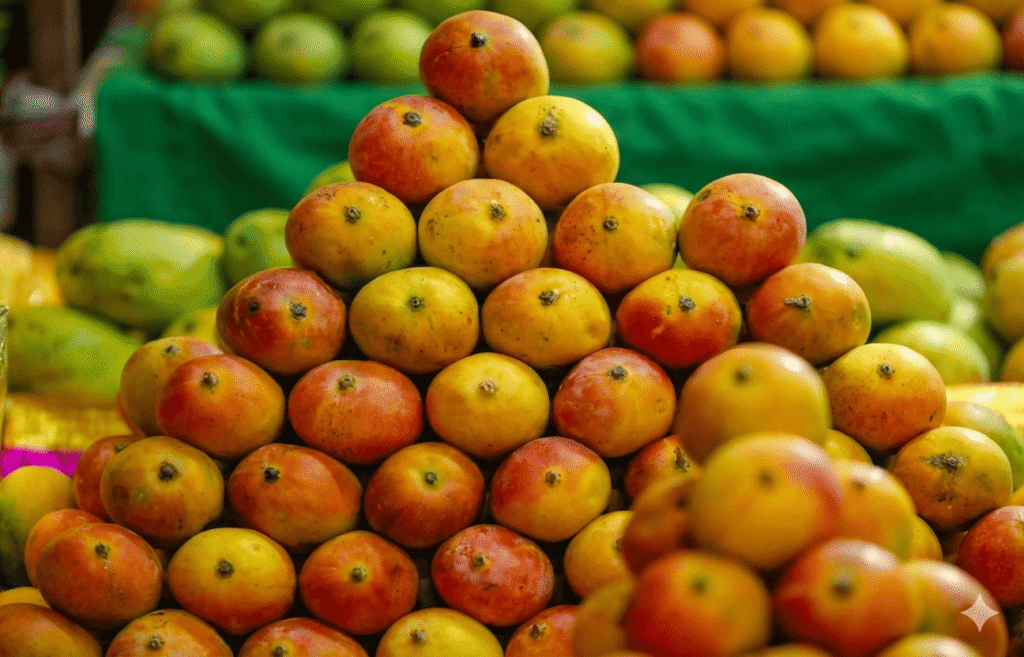
Are you a business owner looking to tap into the lucrative global fruit market? Alphonso mango export from India represents one of the most profitable agricultural business opportunities in 2026, with margins averaging around 35%.
India produces approximately 20 million tonnes of mangoes annually, accounting for nearly 40% of the world’s total mango production. Yet, surprisingly, only a small fraction is exported. This creates an enormous opportunity for entrepreneurs and exporters to enter a growing market valued at over $64 billion globally.
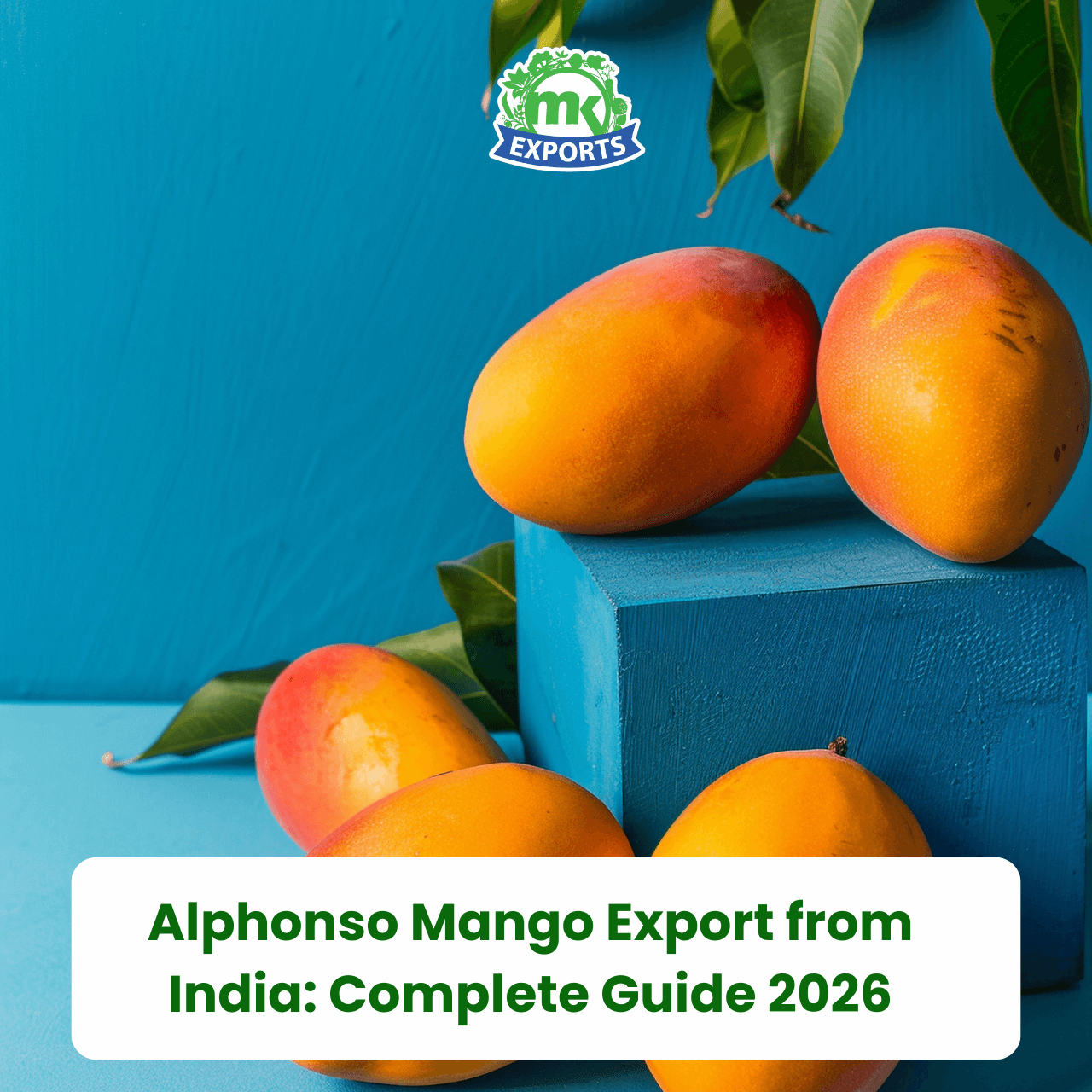
Known as the “King of Mangoes,” the Alphonso variety dominates international markets due to its rich, creamy texture, golden-saffron color, and irresistible aroma. Countries like the USA, UK, UAE, and Canada actively seek these premium mangoes, willing to pay premium prices that make Alphonso mango export from India highly profitable.At MK Exports (www.mkexports.co.in), we’ve been successfully exporting premium Alphonso mangoes for over 21 years, serving clients across USA, UK, UAE, and 15+ countries worldwide. This complete guide walks you through everything you need to know from registration and certifications to shipping logistics and finding international buyers based on our decades of export expertise.
Why Alphonso Mango Export from India is Booming in 2026
1. Growing Global Demand
The global mango market is projected to grow at a CAGR of 8% from 2021 to 2031, driven by increasing consumer preference for healthy, exotic fruits. The Indian diaspora in countries like the USA, UK, and Canada creates consistent year-round demand for authentic Indian mangoes.
2. Premium Pricing in International Markets
Alphonso mangoes command 20-30% higher prices compared to other varieties. In 2024-25, India exported $11.9 million worth of fresh Alphonso mangoes, with the USA alone importing $4.4 million. This premium positioning makes the export business highly attractive.
3. Geographical Indication (GI) Tag Advantage
Alphonso mangoes from Ratnagiri and Devgad in Maharashtra have been granted a GI tag, certifying their authenticity and unique qualities. This recognition enhances their global appeal and protects against counterfeit sellers, giving genuine exporters a competitive edge.
4. Government Support and Incentives
The Agricultural and Processed Food Products Export Development Authority (APEDA) provides subsidies for certifications, marketing assistance, and transport support. The Indian government actively promotes mango exports through various schemes, making it easier for new exporters to enter the market.
Understanding the Alphonso Mango: What Makes It Special?
Origin and Heritage
The Alphonso mango originated over 400 years ago during Portuguese colonial rule in India. Named after Portuguese general Afonso de Albuquerque, this variety was developed through grafting techniques introduced by Jesuit missionaries in Goa.
Unique Characteristics
- Flavor Profile: Sweet with subtle hints of citrus and a creamy, buttery texture
- Aroma: Rich fragrance attributed to myrcene, a compound unique to this variety
- Appearance: Golden-yellow skin with a slight red blush near the stem
- Texture: Non-fibrous pulp that melts in your mouth
- Size: Medium-sized fruits weighing approximately 250 grams
Regional Differences
While both regions produce exceptional mangoes, subtle differences exist:
Ratnagiri Alphonso:
- Slightly smaller and thinner-skinned
- Intense aroma
- Flavor develops early during ripening
Devgad Alphonso:
- Larger size with thicker skin
- Firmer texture suitable for longer transit
- Taste develops in later ripening stages
Both varieties are equally premium and command similar pricing in international markets, making Alphonso mango export from India a viable business from either region
Step-by-Step Process: How to Export Alphonso Mango from India
Step 1: Business Registration and Legal Setup
Before starting Alphonso mango export from India, ensure your business is legally compliant:
Essential Registrations:
- Import Export Code (IEC)
- Issued by Directorate General of Foreign Trade (DGFT)
- Mandatory for all export activities
- Lifetime validity (no renewal required)
- Apply online through DGFT website
- GST Registration
- Required for tax compliance
- Enables you to claim input tax credit
- Business Registration
- Register your company with Ministry of Corporate Affairs (MCA)
- Sole proprietorship, partnership, or private limited company
- APEDA Registration
- Not mandatory but highly recommended
- Provides access to export incentives and subsidies
- Offers market information and technical assistance
- FSSAI License
- Food Safety and Standards Authority of India certification
- Ensures compliance with food safety standards
- Mandatory for food product exports
- MSME/Udyam Certificate
- Provides access to government benefits and schemes
- Helps secure credit facilities at favorable terms
Step 2: Understanding Export Documentation
Critical Documents Required:
- Commercial Invoice: Detailed bill including product description, quantity, price, and payment terms
- Packing List: Breakdown of cartons, weight per carton, and packaging specifications
- Phytosanitary Certificate: Issued by National Plant Protection Organization confirming pest-free status. This document is crucial for mango export to USA from India and other countries.
- Certificate of Origin: Verifies mangoes originated in India
- Bill of Lading (Sea) / Airway Bill (Air): Transport document serving as proof of shipment
- GI Tag Certificate: For Alphonso mangoes from Ratnagiri and Devgad regions
- Export Declaration Form: Required by customs authorities
- CRES Certificate: From Spice Board of India (if applicable)
Step 3: Quality Standards and Treatment Requirements
Different countries have specific import requirements for Alphonso mango export from India:
For USA Exports:
- Irradiation Treatment: Mangoes must receive a minimum absorbed dosage of 400 Grays to eliminate fruit flies
- Hot Water Treatment: Fungicidal dipping using Prochloraz at 500 ppm
- Packaging: Insect-proof boxes with proper ventilation
- Inspection: USDA-APHIS certification required
- Registration: Farms and packhouses must be registered with USDA
For UK and European Exports:
- Hot Water Immersion Treatment (HWT): 48°C for 60 minutes
- Vapor Heat Treatment (VHT): 46.5°C for 30 minutes or 47.5°C for 20 minutes
- Compliance: EU pesticide residue standards
- Certification: Phytosanitary certificates mandatory
For UAE and Middle East Exports:
- Standard phytosanitary certification
- Quality control inspection
- Proper labeling and packaging
- Cold chain maintenance

Step 4: Packaging and Logistics
Packaging Standards:
- Corrugated Fibreboard Boxes (CFB): 3-5 ply boxes with ventilation holes
- Standard Dimensions: 225 x 170 x 90 mm for Alphonso mangoes
- Inner Packaging Materials:
- Shredded paper for cushioning
- Fruit foam nets (EPE – Expanded Polyethylene)
- Tray packing for premium shipments
- Labeling: Clear marking with variety, origin, weight, and export certification details
Logistics Options:
- Air Freight
- Transit time: 3-6 days
- Best for maintaining freshness
- Higher cost but preferred for premium markets
- Minimum quantity: 1,200 kg using ULD (Unit Load Device)
- Sea Freight (Reefer Containers)
- Transit time: 15-30 days
- Temperature maintained: +11°C to +14°C
- Cost-effective for bulk shipments
- Requires controlled atmosphere packaging (CAP)
- Shelf life extended to 35+ days with proper storage
- Cold Chain Management
- Essential from harvest to delivery
- Maintains fruit quality and extends shelf life
- Requires refrigerated storage facilities
- Temperature monitoring throughout transit
Step 5: Finding International Buyers
Top Import Markets for Alphonso Mango Export from India:
- United States – $4.4 million in imports (2024-25)
- United Kingdom – Strong South Asian community demand
- United Arab Emirates – Gateway to Middle Eastern markets
- Kuwait – Growing premium fruit market
- Canada – Expanding Indian diaspora
- Saudi Arabia – High-value market
- Singapore – Regional distribution hub
How to Find Buyers:
- Build relationships with freight forwarders who have buyer connections
- Attend international food trade exhibitions
- Register on B2B platforms (IndiaMART, TradeIndia, Alibaba)
- Connect with APEDA for buyer databases
- Network with Indian grocery stores abroad
- Use export data services (Volza, TradeAtlas) to identify active importers
Profitability Analysis: Is Alphonso Mango Export Worth It?
Revenue Potential
Mango export from India can be highly profitable with margins averaging 35%. Here’s a basic profitability breakdown:
Cost Components:
- Farm price: ₹200-300 per dozen
- Treatment and processing: ₹50-100 per dozen
- Packaging: ₹30-50 per dozen
- Documentation and certification: ₹20-30 per dozen
- Air freight: ₹250-300 per kg to USA/UK/Canada
- Insurance and handling: 2-3% of shipment value
Selling Price:
- International market: ₹800-1,200 per dozen (depending on destination)
- Premium positioning allows 20-30% higher pricing than other varieties
Profit Margin:
- Net profit margin: 30-40% on successful shipments
- Higher margins achievable with direct buyer relationships
Market Growth Projections
The global mango market is expected to reach $98.49 billion by 2031, growing at a CAGR of 6.21% from 2024 to 2031. This growth is driven by increasing health consciousness, demand for exotic fruits, and expanding middle-class populations in developed nations.
Common Challenges and Practical Solutions
Challenge 1: High Freight Costs
Problem: Air freight costs can significantly impact profit margins, especially for new exporters.
Solution:
- Start with smaller shipments to test the market
- Consolidate shipments with other exporters
- Consider sea freight for mango pulp and processed products
- Build volume over time to negotiate better freight rates
Challenge 2: Short Harvest Season
Problem: Alphonso mangoes have a limited 6-8 week harvest window (April-May), restricting export opportunities.
Solution:
- Diversify with other varieties (Kesar, Totapuri, Banganapalli) with different harvest seasons
- Develop mango pulp processing to offer products year-round
- Pre-book with buyers to secure advance orders
- Implement controlled atmosphere storage to extend shelf life
Challenge 3: Stringent Quality Requirements
Problem: Different countries have varying phytosanitary standards and treatment requirements.
Solution:
- Partner with APEDA-certified packhouses
- Invest in proper treatment facilities
- Maintain detailed quality control documentation
- Work with experienced export consultants
- Source from registered farms that follow Good Agricultural Practices (GAP)
Challenge 4: Finding Reliable Buyers
Problem: Establishing trust and finding consistent international buyers can be challenging.
Solution:
- Attend trade shows to meet buyers face-to-face
- Start with established Indian grocery chains abroad
- Use B2B platforms with verified buyer profiles
- Request advance payments or letters of credit
- Build long-term relationships through consistent quality
Frequently Asked Questions (FAQs)
1. What documents are required for Alphonso mango export from India?
The main documents needed include Import Export Code (IEC), GST registration, APEDA registration, FSSAI license, phytosanitary certificate, commercial invoice, packing list, bill of lading/airway bill, certificate of origin, and GI tag certificate (for Ratnagiri/Devgad mangoes). Country-specific documents may also be required depending on your destination market.
2. How profitable is the mango export business from India?
Mango export from India can be highly profitable with margins averaging 30-35%. Premium Alphonso varieties command 20-30% higher prices in international markets. The profitability depends on factors like sourcing costs, freight expenses, market demand, and your ability to maintain quality during transit. Direct relationships with buyers can further improve profit margins.
3. Which countries import the most Alphonso mangoes from India?
The top importers of Alphonso mangoes from India are the United States ($4.4 million in 2024-25), United Kingdom, Kuwait, United Arab Emirates, Canada, and Saudi Arabia. These markets collectively account for over 60% of India’s total Alphonso mango exports. Emerging markets include Japan, New Zealand, Australia, and several European countries.
4. What is the irradiation requirement for exporting mangoes to the USA?
For mango export to USA from India, mangoes must undergo irradiation treatment with a minimum absorbed dosage of 400 Grays to eliminate fruit flies and other pests. This treatment must be conducted at facilities approved by both USDA and Indian authorities. Additionally, hot water fungicidal dipping at 500 ppm Prochloraz is required. All treated mangoes must be packed in insect-proof boxes and inspected by USDA-APHIS before shipment.
5. Do I need APEDA registration to export mangoes from India?
While APEDA registration is not mandatory, it is highly recommended for mango exporters. Registration provides access to export incentives, subsidies for certifications and marketing, technical assistance, market information, and government schemes. APEDA also facilitates international buyer connections and ensures compliance with quality standards, making your export business more credible and successful.
6. How long do Alphonso mangoes stay fresh during export?
Fresh Alphonso mangoes have a natural shelf life of 7-10 days after harvest. However, with proper cold chain management, the shelf life can be extended to 15-20 days for air freight shipments. For sea freight, using Active Modified Atmosphere Packaging (AMAP) and Controlled Atmosphere Packaging (CAP) can extend shelf life up to 35 days while maintaining quality. Temperature must be maintained between +11°C to +14°C throughout transit.
Best Practices for Successful Alphonso Mango Export
1. Source from Certified Farms
Partner with GI-tagged farms in Ratnagiri and Devgad that follow Good Agricultural Practices (GAP). This ensures consistent quality and authenticity, which are crucial for building your reputation in international markets.
2. Invest in Quality Control
Implement strict quality control measures including visual inspection, ripeness assessment, size grading, and damage screening. Reject any fruits with bruises, cuts, or pest damage. Quality consistency builds buyer trust and repeat orders.
3. Build Strong Logistics Partnerships
Work with experienced freight forwarders who specialize in perishable goods. Reliable logistics partners with cold chain expertise ensure your mangoes reach buyers in optimal condition, reducing rejection rates and building customer satisfaction.
4. Focus on Compliance
Stay updated on changing international regulations for each target market. Maintain meticulous documentation and ensure all certifications are current. Non-compliance can result in rejected shipments and significant financial losses.
5. Develop a Brand Identity
Create a recognizable brand for your exports. Use consistent packaging, include your story (farm origins, quality commitments), and leverage the GI tag to differentiate your products. Premium branding justifies higher prices.
6. Explore Value-Added Products
Don’t limit yourself to fresh fruit exports. Consider developing mango pulp, puree, dried slices, juice, and other processed products. These have longer shelf life, can be shipped year-round, and open new market segments
Conclusion: Your Pathway to Export Success
Alphonso mango export from India presents an exceptional business opportunity in 2026. With the global mango market projected to reach $98 billion by 2031, the demand for premium Indian varieties continues to grow exponentially.
Success in this industry requires commitment to quality, thorough understanding of regulations, investment in proper infrastructure, and building strong relationships throughout the supply chain—from farmers to international buyers.
At MK Exports, we’ve been facilitating successful Alphonso mango exports for over 21 years. Our expertise in sourcing premium GI-tagged mangoes from Ratnagiri and Devgad, combined with complete regulatory compliance and reliable cold chain logistics, ensures your mangoes reach international markets in perfect condition.
Ready to start exporting Alphonso mangoes? Partner with MK Exports for hassle-free export solutions. Contact us today at www.mkexports.co.in to discuss your requirements, or call us to speak with our export specialists. The world is waiting to taste the King of Mangoes from India. let us help you deliver it.